

Is It Legal to Sleep in a Motorhome in the UK? 2026 Laws Explained
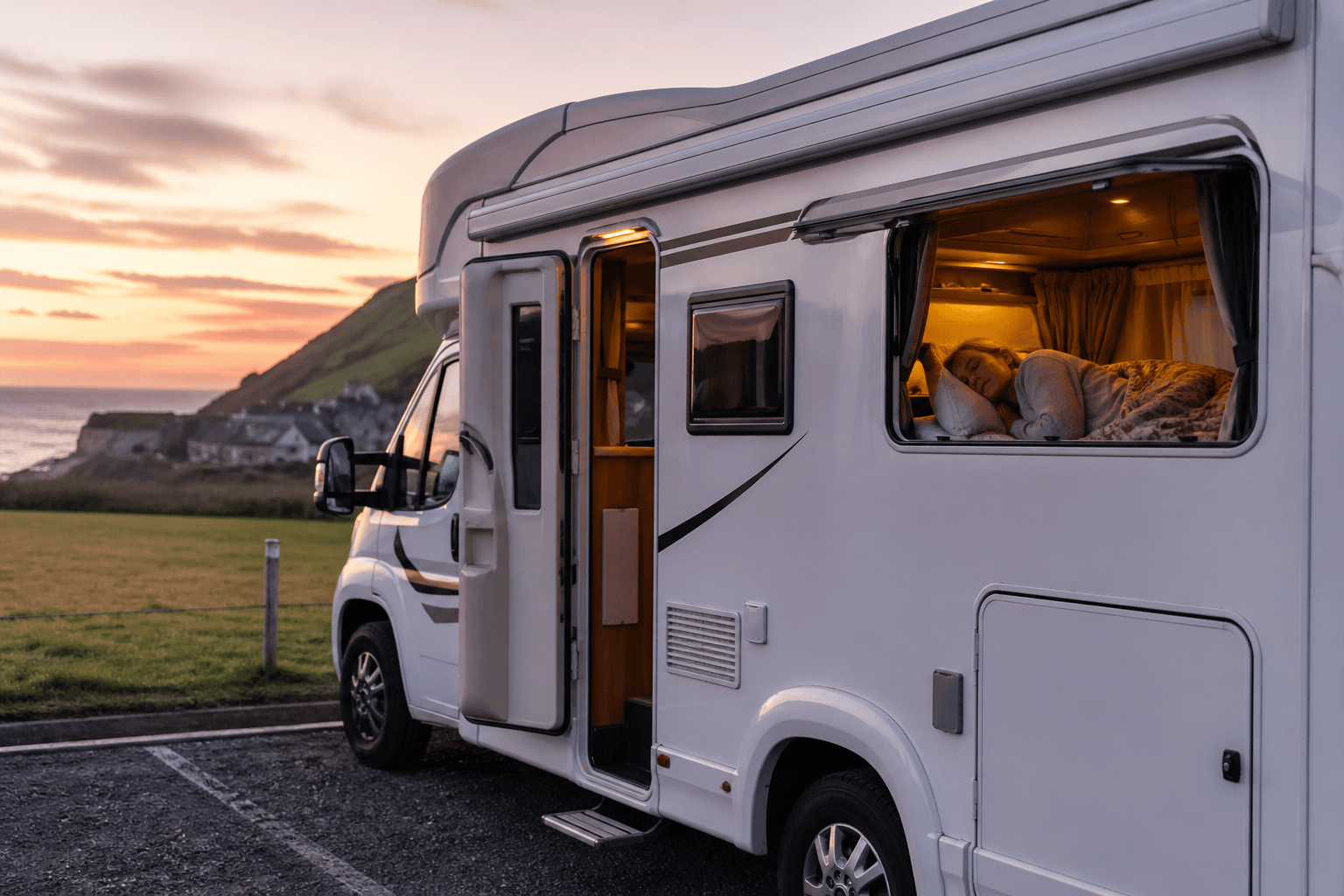
The open road is the ultimate dream, isn’t it? You’ve got your playlist ready, the snacks are packed, and you’re navigating the rolling hills of the Cotswolds or the rugged peaks of the Highlands.
But as the sun starts to set, a classic question always bubbles up: Is it legal to sleep in a motorhome in the UK? In 2026, the answer is a bit like a British weather forecast, mostly clear with some patchy clouds of “it depends.”
While the UK is one of the most beautiful places for motorhome travel, the laws surrounding where you can rest your head have become a bit more structured over the last few years. If you are planning your next getaway, here is everything you need to know to stay on the right side of the law while enjoying your motorhome holidays.
The Big Question: Is It Actually Legal?
To give you the short version: Is it legal to sleep in a motorhome in the UK? Yes, but it’s rarely about the act of sleeping itself.
It’s about where the wheels are touching the ground. Technically, there is no single national law that says “Thou shalt not sleep in a vehicle.” However, almost every square inch of land in the UK is owned by someone, whether it’s a private individual, a council, or a national body.
- On Public Roads:
You can legally park a motorhome on a public highway as long as it is taxed, insured, and not causing an obstruction. However, many local councils have introduced Traffic Regulation Orders (TROs). If you see a sign that says “No Overnight Parking,” that is a legal order. If you ignore it, you aren’t just being cheeky; you’re committing a traffic violation.
- In Scotland:
People often think Scotland is a free-for-all because of the “Right to Roam.” While Scotland is much more relaxed for hikers and tent campers, the Land Reform (Scotland) Act 2003 specifically excludes motorised vehicles. You still need landowner permission to stay off-road.
The 2026 “Pavement Rule” & Obstruction
One of the biggest shifts we’ve seen in 2026 is the crackdown on pavement parking. Because travelling in a motorhome has exploded in popularity, councils are now much stricter about vehicles blocking pedestrian access.
If your motorhome is so wide that you have to put “two wheels on the curb” to let traffic pass, you could be hit with a Penalty Charge Notice (PCN). In 2026, the rule of thumb is: if a wheelchair or a double pram can’t get past your van on the pavement, you’re parked illegally.
Elevating Your Stay: Luxury Motorhomes
If you’ve opted for luxury motorhomes for hire, you probably have a van that is self-contained. It is a massive legal advantage in 2026. Many of the new “Aires” (designated overnight transit spots) popping up in Cornwall and the Highlands require you to have your own onboard toilet and wastewater tanks.
When you choose a high-end motorhome hire UK service, like Jepson’s Motorhomes, you’re getting a vehicle that meets these “self-contained” standards. It opens up more legal “stopover” options that aren’t available to smaller, basic campervans.
Where Should You Stay Instead?
Rather than worrying about a knock on the window at 2 AM, most travelers in 2026 are leaning into “Grey Space” camping and official sites:
- Pub Stopovers (Brit Stops): This is the gold standard for casual travel. You stay in a pub car park for free, and in return, you head inside for a pint or a Sunday roast. It’s 100% legal because you have the landowner’s permission.
- Certified Locations (CLs): These are tiny, private sites that only allow five vans at a time. They are often tucked away on farms and offer the “wild” feel without the legal risk.
- Council-Run Aires: Following the lead of Europe, many UK towns have opened dedicated motorhome parking zones where you can stay for 24–48 hours for a small fee.
The “Leave No Trace” Ethics
The reason the question “Is it legal to sleep in a motorhome in the UK?” has become so complex is due to “over-tourism” in certain areas. To keep the roads open for everyone, the 2026 etiquette is simple: Arrive late, leave early, and leave nothing behind.
If you are “resting” because you are tired, the police are generally very understanding. If you have the leveling jacks down, the awning out, and a BBQ roaring on the pavement, you are “camping,” and that will get you moved on very quickly.
Final Verdict
So, is it legal to sleep in a motorhome in the UK? In a designated spot, a campsite, or on a road with no restrictive signage, yes. On private land or in a “No Overnight” council zone, no. By booking luxury motorhomes from Jepson’s Motorhomes, you ensure your vehicle is fully equipped for legal stopovers, making your holidays as stress-free as they are scenic.
FAQs
Can I sleep in a motorway service station?
Yes, but usually only for a fee. Most services allow 2 hours of free parking; after that, you’ll need to pay (often £20-£30) to stay overnight.
Is "Wild Camping" legal in a motorhome?
In England, Wales, and Northern Ireland, it is technically civil trespass without landowner permission. In Scotland, it is more tolerated but still not a legal “right” for motor vehicles.
What happens if I ignore a "No Overnight Parking" sign?
You can be issued a Penalty Charge Notice (PCN), usually ranging from £70 to £100. In extreme cases of obstruction, your vehicle could be towed.
Do I need a special license for a luxury motorhome?
If the motorhome is under 3,500kg, a standard Category B (car) license is fine. For larger, heavier luxury models (up to 7,500kg), you may need a Category C1 license.
Can I sleep in my motorhome on my own driveway?
Generally, yes! However, check your property deeds or leasehold agreement, as some modern housing estates have “restrictive covenants” that forbid parking large commercial vehicles or motorhomes overnight.