

A Complete Guide to Campervan Storage: Tips to Keep Your Van Safe
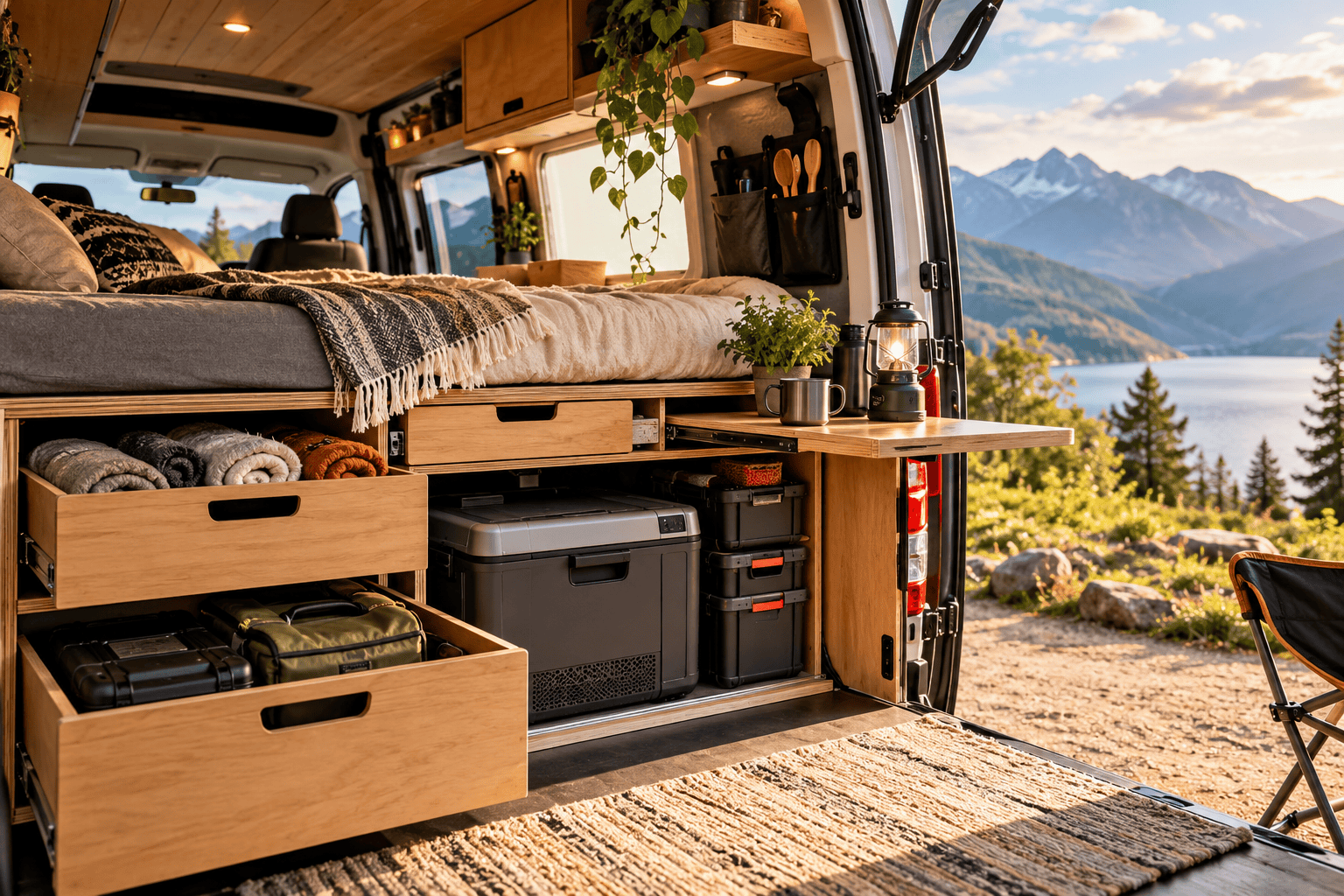
A campervan can look perfectly fine when you park it in autumn, only to greet you with a flat battery, damp bedding or a musty smell when spring arrives. Good campervan storage protects your vehicle from moisture, theft and avoidable maintenance costs while keeping it ready for your next road trip.
Whether you park at home or use a specialist facility, a little preparation now can save you a frustrating start to your next adventure.
What Are the Best Campervan Storage Tips?
Start with a clean, dry van. Crumbs hidden beneath the seats, wet towels in cupboards and forgotten food can cause trouble while the vehicle sits unused.
Before storage, take care of these essentials:
- Clean the interior: Empty the fridge, remove rubbish and wipe down kitchen surfaces.
- Wash the exterior: Remove dirt and check the bodywork, windows and seals for damage.
- Check for damp: Inspect cupboards, upholstery and corners where moisture tends to collect.
- Protect your belongings: Remove valuables, important documents and portable electronics.
- Check the tyres: Follow the manufacturer’s guidance for tyre pressures during extended parking.
- Review maintenance: Address overdue servicing and minor repairs before they become bigger problems.
Do not overlook ventilation. A closed van containing damp clothes or wet upholstery can develop mould surprisingly quickly. Dry everything properly before locking up.
How Can I Keep My Campervan Safe During Storage?
Security starts with choosing the right parking place. A quiet driveway might be convenient, but a secure facility could offer better protection if your vehicle is expensive or rarely used.
For added security, consider these measures:
- Use a suitable steering lock or another physical security device.
- Activate the fitted alarm and immobiliser.
- Keep keys away from doors and windows, particularly with keyless-entry systems.
- Consider a vehicle tracker.
- Remove anything valuable from view.
- Photograph the vehicle’s condition before storage.
Check your insurance policy, too. Your insurer may specify security devices, approved storage arrangements or conditions for extended periods of non-use. Confirm these requirements before leaving your campervan unattended for months.
What Is the Best Way to Store a Campervan Over Winter?
British winters bring plenty of rain, chilly nights and occasional freezing temperatures. Your campervan needs extra attention if it will remain parked until spring.
Start with the water system. Drain tanks, taps, pipes and other vulnerable components according to the vehicle handbook. Water left in pipes can freeze, expand and cause expensive damage.
Next, prepare the batteries. The correct procedure depends on the battery type and your vehicle’s electrical systems. Follow the manufacturer’s instructions for charging, isolation and maintenance.
A few additional precautions help:
- Remove wet bedding, clothing and towels.
- Clean the fridge and follow its storage instructions.
- Check window seals and roof vents for leaks.
- Use a suitable breathable cover if storing outdoors.
- Check tyre pressures and inspect the vehicle periodically.
- Ensure the coolant and screenwash are suitable for winter conditions.
Avoid wrapping your van in an unsuitable plastic cover. Trapped condensation can damage paintwork and encourage mould.
For further guidance, consult the Camping and Caravanning Club’s winter storage advice alongside your vehicle handbook.
Where Are the Best Places to Store a Campervan Safely?
Your choice depends on your budget, available space and how frequently you travel.
| Storage option | Best for | What to consider |
| Home driveway | Convenient access | Weather exposure and security |
| Private garage | Smaller campervans | Vehicle dimensions and ventilation |
| Specialist storage facility | Long-term storage | Security, access hours and fees |
| Covered commercial storage | Protection from direct rainfall | Ventilation and storage conditions |
Before booking a facility, check its maximum vehicle dimensions and whether you can access your van outside normal office hours. Ask about CCTV, controlled entry, battery charging and insurance requirements.
Read Also:- Where Can I Hire a Motorhome for a 3-Day Break from Blackburn?
Is Motorhome Hire a Better Option?
If your campervan spends most of the year parked, ownership costs can add up. Insurance, servicing, maintenance and storage bills continue even when you are not exploring the countryside.
For occasional trips, Motorhome hire UK options let you enjoy the freedom of the open road without worrying about long-term parking.
You could also explore luxury motorhomes for hire for a more comfortable holiday, whether you are planning a romantic escape, a family break or a scenic tour through Lancashire and beyond.
At Jepson’s Ribble Valley Motorhome Hire, you can explore motorhome options for your next UK adventure. Comparing hire costs with the annual expenses of owning a vehicle can help you decide which approach suits your travel plans.
Frequently Asked Questions
How often should I check my campervan during storage?
Regular inspections are important, particularly during winter. Monthly checks are a useful starting point, subject to the manufacturer’s advice and your storage conditions.
Should I cover my campervan outdoors?
A properly fitted, breathable cover can offer protection from the elements. Choose one designed for your vehicle and follow the fitting instructions.
Should I disconnect the battery?
That depends on the battery type and the vehicle’s electrical systems. Check the handbook before disconnecting anything.
How can I prevent damp and mould?
Dry the interior, remove wet fabrics, maintain appropriate ventilation and repair leaks promptly.
Is indoor campervan storage worth paying for?
It can be, particularly if the facility provides suitable security and weather protection. Compare the annual cost with your budget, insurance requirements and the condition of your vehicle.
The bottom line: Clean your campervan, protect its water system and batteries, and choose secure storage before the weather turns. Your future self will thank you when the next road trip begins without an unexpected repair bill.