

New Driving Rules for Motorhomes in the UK (2026): What Every Driver Must Know
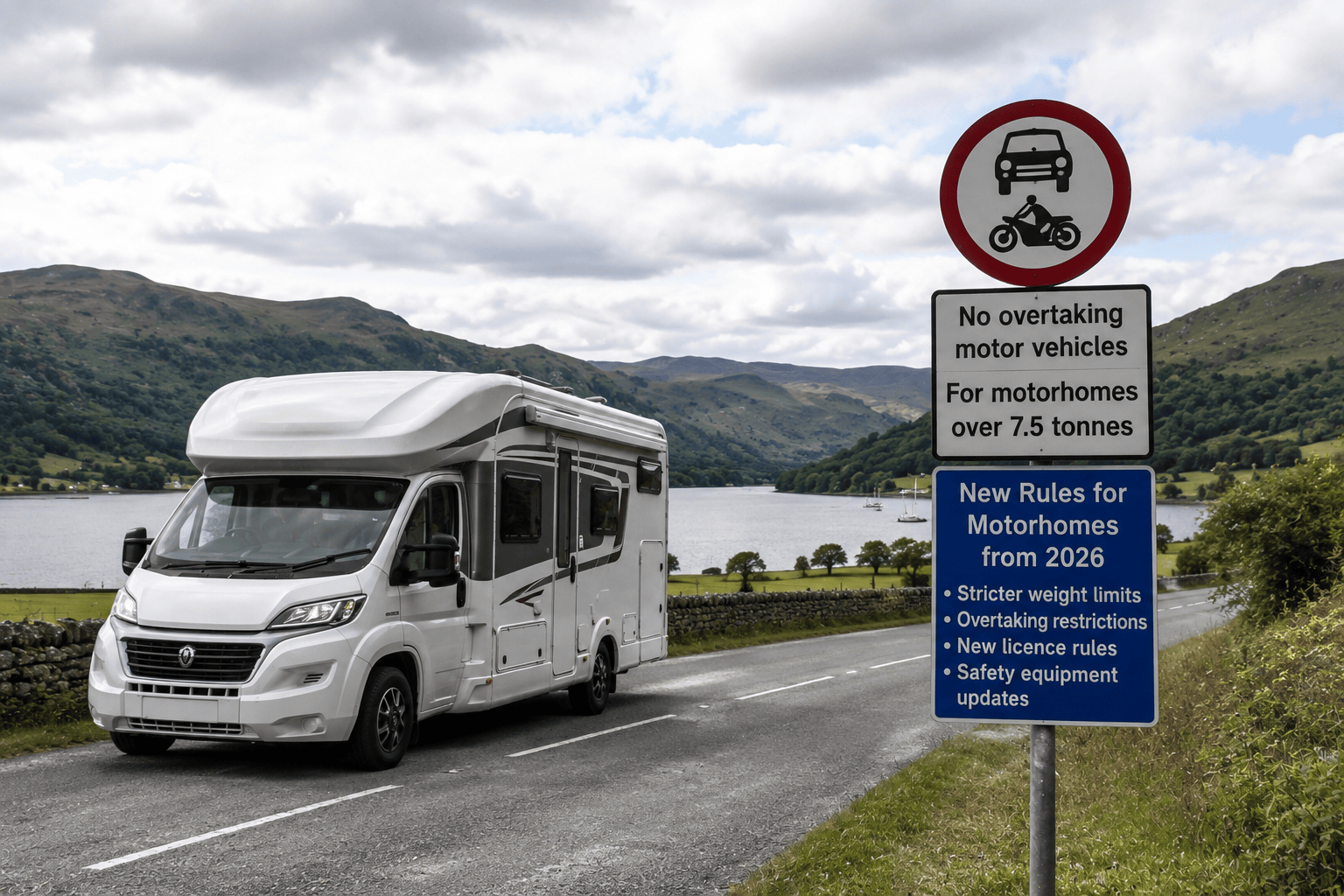
If you’ve been dreaming of hitting the North Coast 500 or parking up by a Cornish beach this summer, you’ve probably noticed that the vibe around van life is shifting.
It’s not just about the freedom of the road anymore; it’s about staying on the right side of some significant legislative changes. As we head into the peak travel season of 2026, a fresh set of new driving rules for motorhomes has officially landed.
Whether you’ve just invested in a luxurious motorhome on the market or you’re looking into hiring a motorhome for a quick weekend getaway, these updates are going to affect how you pack, drive, and even park. Let’s break down what you actually need to know.
5 New Driving Rules for Motorhomes in the UK
Here are 5 latest rules for driving motorhomes in the UK:
1. The Weight Issue: New Licensing Thresholds
For years, the “3.5-tonne rule” has been the bane of many motorhomers’ existence. In 2026, the DVSA tightened the screws on vehicle weight checks.
While the standard Category B license still generally covers you up to 3,500kg, the 2026 rules introduce stricter roadside enforcement for “Revenue Weight.”
If you are opting for luxury motorhomes for hire, these vehicles are often packed with high-end tech, heavy water tanks, and luxury finishings that push them right to the limit. There is now a “Zero Tolerance” policy on overloading.
Previously, you might have been given a small margin of error. Now, if your motorhome is even 1% over its Maximum Authorised Mass, you could face an on-the-spot fine and be prohibited from driving further until the excess weight is removed.
2. Low Emission Zones: It’s Not Just London Anymore
If you haven’t checked the “Clean Air” maps lately, you’re in for a surprise. In 2026, over fifteen new cities across the UK have implemented or expanded their Low Emission Zones (LEZ) and Zero Emission Zones (ZEZ).
Most older diesel motorhomes (pre-Euro 6) are now effectively barred from city centers in places like Manchester, Bristol, and Edinburgh without paying a hefty daily charge, sometimes as high as £50 per day for heavy leisure vehicles.
If you are looking at motorhome hire UK options, this is a massive win for renters. Rental fleets are almost always composed of the newest, most compliant models, meaning you can glide through these zones without a second thought (or a second bill).
3. The “Smart” Safety Tech Mandate
As of 2026, any motorhome registered after January 1st must be equipped with specific “Intelligent Speed Assistance” (ISA) and advanced emergency braking systems.
But the new driving rules for motorhomes now strongly recommend that older, larger vehicles over 5 tonnes be retrofitted with blind-spot sensors.
With more cyclists and e-scooters on the road than ever, the UK government is pushing for “Direct Vision” standards across all categories.
4. Parking and Overnighting: The “Leave No Trace” Law
The era of “stealth camping” in UK laybys is getting a lot harder. The 2026 Criminal Justice and Public Order updates have given local councils more power to move on motorhomes parked overnight in non-designated areas.
To combat the “over-tourism” seen in the Highlands and the Lake District, a new digital permit system is being trialed. In certain “Hotspot Zones,” you must now pre-book your parking spot via a national app, even if it’s just for a few hours of sightseeing.
5. Speed Limit Changes: The “20 is Plenty” Expansion
One final thing to watch for: the 20mph default speed limit. Following the lead of Wales, many English and Scottish counties have moved to a 20mph default for residential and high-traffic areas in 2026.
For a large motorhome, maintaining 20mph requires a bit more focus and gear management. Keep a close eye on the signs; speed cameras in these zones are being calibrated specifically to catch those who think 25mph is “close enough.”
How Jepson’s Motorhomes Makes It Easy
Navigating these rules can feel like a full-time job, but it doesn’t have to ruin your holiday. This is where Jepson‘s Motorhomes comes into play. If the idea of weighing your van or checking LEZ maps makes your head spin, Jepson offers a stress-free alternative.
Our fleet of luxury motorhomes is kept meticulously up-to-date. When you choose a motorhome hire package from Jepson, you’re getting:
- Fully Compliant Vehicles: All their vans meet the latest Euro 6 emissions standards.
- Weight-Managed Rigs: They provide clear guidance on payload so you don’t fall foul of the DVSA.
- Tech-Heavy Comfort: Many of their models represent the Most Luxurious Motorhome designs available, featuring the latest safety tech as standard.
Instead of worrying about the fine print, you can focus on the view through the windscreen.
Final Thoughts
The road is still calling, and the UK remains one of the most beautiful places on Earth to explore by van. These new driving rules for motorhomes aren’t here to stop the fun; they’re here to make the roads safer and the air cleaner for everyone.
By staying informed and letting experts like Jepson‘s Motorhomes handle the hardware, you can ensure your 2026 road trip is remembered for the sunsets, not the summonses.
FAQs
1. Can I still drive a motorhome on a standard car license in 2026?
Yes, as long as the vehicle’s MAM is 3,500kg or less. If you want to drive the most luxurious motorhome over that weight, you’ll usually need a C1 entitlement on your license.
2. Do the new driving rules for motorhomes apply to rented vans?
Absolutely. The driver is responsible for following all rules, including weight limits and speed zones. However, Jepson‘s Motorhomes ensures the vehicle itself meets all the latest mechanical and emission requirements.
3. What happens if I enter an LEZ in an old motorhome?
You will likely be caught by ANPR cameras and issued a Penalty Charge Notice. It’s always best to check your vehicle’s compliance on the government website before you set off.
4. Is "Wild Camping" now illegal in the UK?
Technically, “wild camping” in a motorhome has always been a grey area (except in parts of Scotland), but the 2026 rules have made enforcement much stricter. Always stick to designated sites or use apps like Brit Stops to find legal spots.
5. Do I need a special permit for the Scottish Highlands?
As of 2026, some popular routes are trialing a “Highland Pass” to manage traffic. Check the Visit Scotland website before your trip to see if your route requires a digital permit.