

Can You Live in a Caravan Full-Time in 2026? UK Rules, Tips & Reality Check
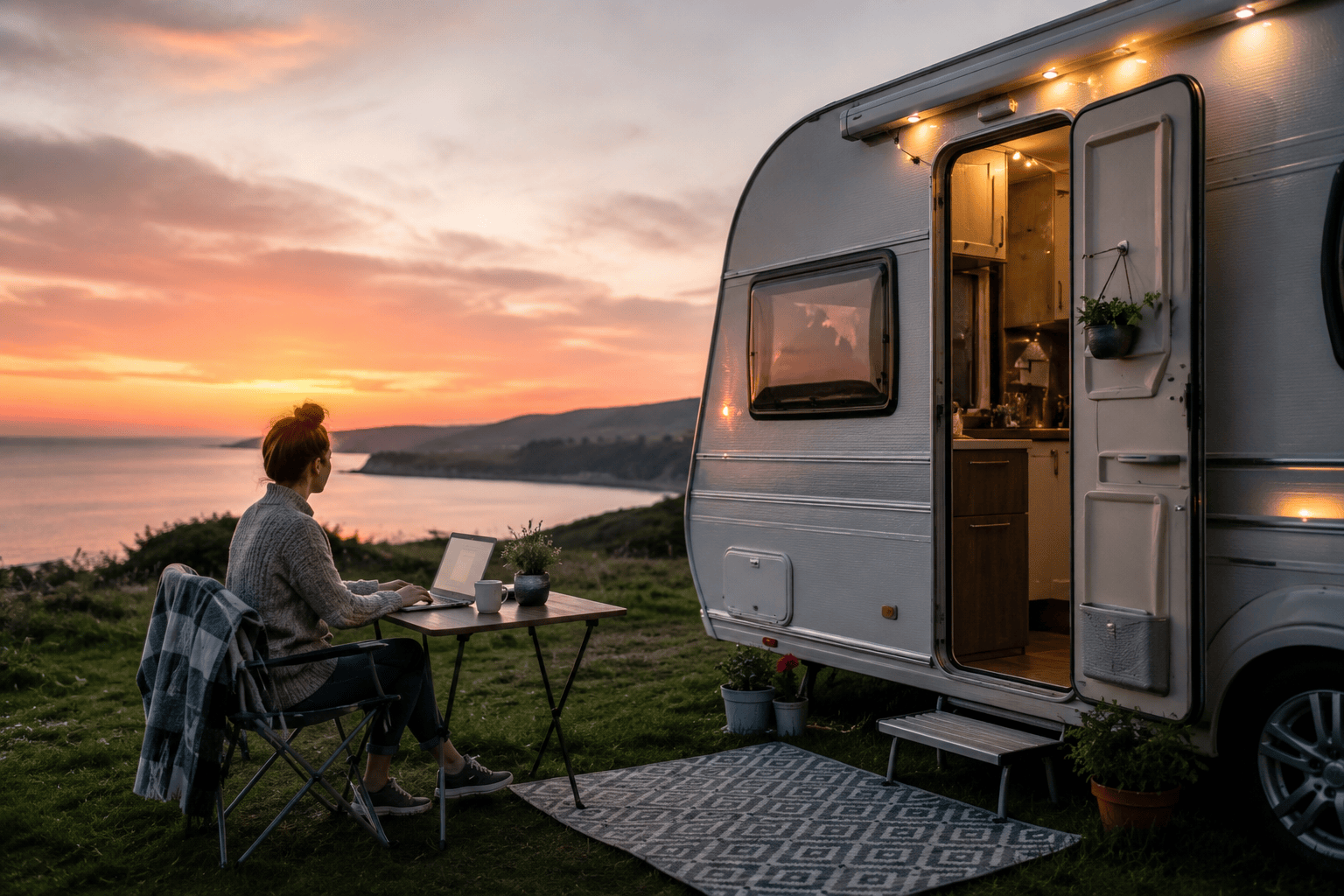
Let’s be completely honest: the British housing market in 2026 is a bit of a circus. Between skyrocketing rents, unpredictable mortgage rates, and the relentless urge to just escape the daily grind, the idea of packing up and moving onto four wheels sounds incredibly tempting.
The dream of waking up to a Scottish loch or a Yorkshire hillside with a fresh mug of coffee is enough to make anyone want to hand in their landlord’s notice tomorrow. But before you buy a hitch and sell your sofa, we need to talk about the reality of living in a caravan full-time.
Is it a stroke of financial genius, or a logistical nightmare wrapped in fiberglass? Can you legally live in a caravan permanently in the UK? Let’s strip away the filtered Instagram aesthetics and dive into the cold, hard UK rules, practical tips, and an honest reality check for 2026.
The Legal Minefield: UK Rules in 2026
Can you legally do it? Yes, but it involves a mountain of bureaucratic red tape. The UK doesn’t have a single law that says “You cannot live in a caravan.” Instead, the hurdles come from planning permissions, site licenses, and local council regulations.
-
The 28-Day Trap
If you plan to park a touring caravan on private land or a standard holiday park, you will quickly run into the “28-day rule.” By law, most holiday parks are only licensed for seasonal recreational use.
You have to vacate the site for a specific period every year (often during January or February), or you cannot stay there for more than 28 consecutive days. Sneaking past it can result in the site owner facing massive fines, which means they will evict you as soon as possible.
-
Residential vs. Holiday Licenses
To live in a caravan on a site 365 days a year legally, the park must hold a full residential license. These sites are protected by the Mobile Homes Act, giving you proper tenant rights.
The catch? Residential pitches are highly sought after, come with council tax obligations (usually Band A), and charge monthly plot fees (ground rent) that can eat into your savings.
-
Parking on Your Own Land
Thinking of buying a cheap plot of land and dropping a caravan on it? Not so fast. In the UK, doing this usually requires a change-of-use planning permission from the local council.
The only real exception is if the caravan is parked within the “curtilage” of an existing main house and is used strictly as an extra bedroom, not a self-contained, independent dwelling.
Caravan vs. Motorhome: What’s the Play?
If you are committing to the nomadic lifestyle, you need to decide on your vehicle architecture. While a traditional towed caravan offers more living space per pound spent, it is significantly harder to move frequently and relies heavily on campsite infrastructure.
This is why many 2026 nomads are shifting their gaze toward motorised options. If you aren’t sure whether you can handle the tight quarters, it is highly recommended to test the waters first via a premium motorhome hire UK agency.
Spending a few weeks on the road in a rental will quickly teach you if you actually enjoy emptying a chemical toilet cassette in the freezing rain.
| Feature | Touring Caravan | Motorhome / Campervan |
| Mobility | Low (Requires a heavy tow vehicle) | High (Turn the key and drive) |
| Living Space | High (Wide, square layouts) | Moderate to Compact |
| Off-Grid Setup | Difficult (Relies on hookups) | Easier (Solar/lithium integration) |
| Stealth Camping | Virtually impossible | Possible in discreet models |
If you find that you love the lifestyle but refuse to sacrifice your creature comforts, you might want to look into luxury motorhomes for hire. Trying out a high-end, winterised vehicle with underfloor heating and a proper shower matrix will redefine your expectations of mobile living.
The Upgrade Path: Jepson’s Motorhomes
When you’re ready to step away from basic camping and move toward a setup that genuinely feels like a luxury apartment, working with a specialist dealer makes all the difference.
For those looking to invest in a permanent or long-term mobile home, Jepson’s Motorhomes is an exceptional partner in the UK market.
Whether you are looking to purchase a reliable, robust home-on-wheels or exploring temporary high-end options, checking out the most luxurious motorhome layouts in their inventory can be eye-opening.
We are talking about integrated off-grid solar arrays, high-speed built-in Wi-Fi routers, spacious kitchens, and island beds that ensure you never feel like you’re “roughing it.”
Having a vehicle with superior insulation is what separates a cosy winter evening from a miserable, damp survival exercise.
The Verdict
Living in a caravan full-time in 2026 is an incredible way to slash your living costs, gain absolute geographic freedom, and live a minimalist, eco-friendly life. However, it is not an easy alternative to a traditional flat.
It requires resilience, mechanical sympathy, and a willingness to navigate complex local council rules. If you approach it with realistic expectations—and a highly insulated vehicle—it might just be the best decision you ever make.
FAQs
Can I use a regular holiday park as my legal permanent address?
No, holiday parks lack a residential license and staying there permanently violates council regulations.
Do I have to pay Council Tax if I live in a caravan?
Yes, if you reside on a licensed residential site, you will generally pay Band A council tax.
Can I park and live in my caravan on any public road in the UK?
No, overnight sleeping in a towed caravan on public roads or laybys is illegal or restricted across most UK councils.
What is the biggest hidden cost of full-time caravan living?
LPG gas bottles for winter heating and unexpected plot maintenance fees can add up incredibly quickly.
Can I work remotely from a caravan full-time?
Yes, using modern mobile 5G routers or Starlink satellite dishes makes remote work completely seamless in 2026.