

Motorhome Water Systems Explained: Fresh Water, Waste Water and Pumps
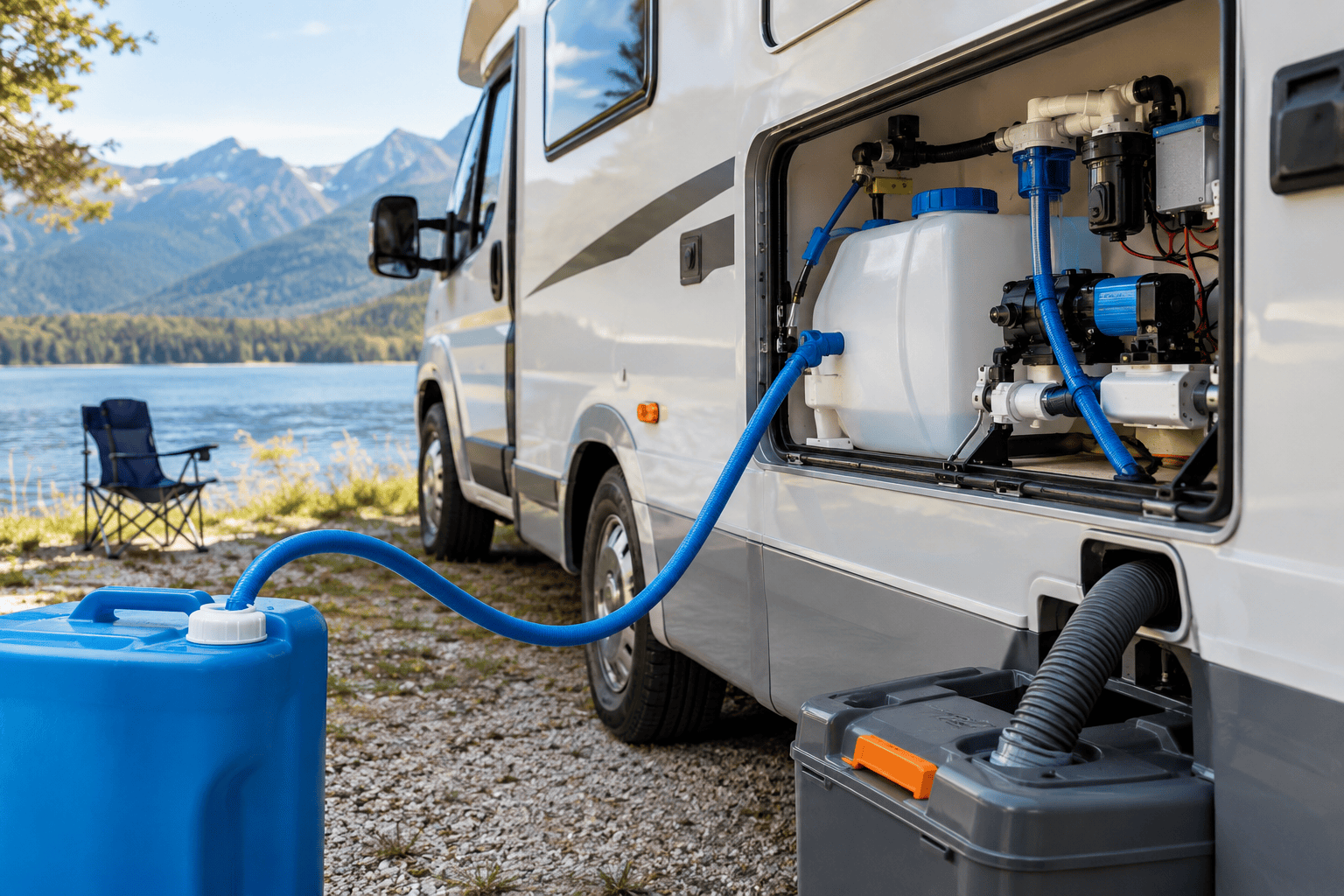
Turn on the tap and water appears. Take a shower and it drains away. Simple enough.
But behind those everyday comforts sits a network of tanks, pipes, drains and a pump that keeps your motorhome’s water system running. For a first-time renter, knowing how it works can make collection day much less daunting.
You do not need to be a motorhome expert. You simply need to know where the water comes from, where it goes, and what to do when something stops flowing.
How does a motorhome water system work?
The easiest way to understand a motorhome water system is to follow the water.
Fresh water enters the onboard tank through an external filling point. When you open a tap or switch on the shower, a 12V water pump draws water from the tank and pushes it through the vehicle’s plumbing. Depending on the motorhome, the pump may operate through a pressure switch or tap controls.
The basic journey is:
Fresh water tank → pump → taps and shower → grey water tank → disposal point
That’s really all there is to it.
The layout and controls differ between motorhomes, so ask for a quick demonstration before driving away. Find the fresh water inlet, pump switch, tank indicators and waste outlet while everything is still familiar.
It beats figuring them out at 10pm in the rain.
What is the difference between fresh water and waste water tanks?
They do completely different jobs.
The fresh water tank stores your clean water supply. The grey water tank collects used water from sinks and showers.
| System | Purpose | What to remember |
| Fresh water tank | Supplies clean water | Use an appropriate drinking-water source |
| Grey water tank | Collects used sink and shower water | Empty at an approved disposal point |
| Toilet system | Handles toilet waste | Follow the vehicle’s specific instructions |
There is another practical point worth remembering: grey water tanks can fill sooner than expected.
A couple of long showers, washing dishes after dinner and a little general cleaning can soon add up. Keep an eye on the tank level, particularly if you are staying somewhere without a convenient waste facility.
How do motorhome water pumps work?
The pump provides the pressure that moves water around the vehicle.
Open a tap and the system detects the demand. The pump draws water from the fresh tank and pushes it through the pipes. Close the tap and the pump stops.
If it runs but little or no water comes out, check the straightforward things first:
- Is there enough water in the fresh tank?
- Is the pump switched on?
- Could air be trapped in the system?
- Does the pump filter need checking?
- Is there an obvious leak?
Air locks and debris can affect pump operation, while pump filters may need periodic inspection.
When choosing luxury motorhomes for hire, ask the hire company to explain the pump and water controls during handover. You are not expected to repair the plumbing yourself. Knowing what each control does is the important bit.
How do I clean and sanitise a motorhome water system?
Fresh water systems need sensible maintenance, particularly after a vehicle has been stored or left unused.
The Caravan and Motorhome Club recommends sterilising a fresh water system after periods of non-use, followed by thorough flushing with clean water. Always use a product suitable for the system and follow its instructions.
A typical cleaning routine involves:
- Drain the existing water.
- Add an appropriate water-system sanitiser.
- Circulate it through the relevant plumbing.
- Leave it for the recommended contact time.
- Drain the solution.
- Flush thoroughly with clean water.
Do not assume an ordinary household cleaner is suitable. Motorhome water systems require products intended for the job, especially where water is used for drinking.
If you are renting rather than owning, ask what preparation and sanitisation has been carried out before collection.
How do you empty and maintain a motorhome grey water tank?
Grey water needs to be disposed of properly.
Use the designated facilities at campsites or motorhome service areas. Never release wastewater onto the roadside, a campsite pitch or other unauthorised areas.
Regular tank care also helps keep unpleasant smells under control. Soap, grease and food residue can accumulate inside the system, which is why specialist grey water tank treatments are available for cleaning and odour management.
Before your first overnight stop, make sure you know:
- Where the grey water outlet is
- How the outlet is operated
- Where the campsite’s disposal point is
- How to check the tank level
- Whether your vehicle has any specific drainage instructions
A five-minute explanation at handover can save a lot of head-scratching later.
Your motorhome water checklist before setting off
Before starting your UK road trip, check:
- Fresh water level
- Pump operation
- Tap and shower flow
- Visible leaks
- Grey water level
- Waste disposal arrangements
- Fresh water hose and suitable connectors
- Vehicle-specific drainage instructions
Your hire company’s guidance and the motorhome handbook should always take priority because water systems vary between vehicles.
FAQs
How does a motorhome water system work?
Fresh water is stored in a tank, pumped through the plumbing to taps and showers, then used water flows into a grey water tank for proper disposal.
What is the difference between fresh water and waste water tanks in a motorhome?
The fresh water tank holds your clean supply, while the grey water tank collects used water from sinks and showers.
How do motorhome water pumps work?
The pump draws water from the fresh tank and pushes it through the plumbing when a tap or shower creates demand.
How do I clean and sanitise a motorhome water system?
Drain the system, use a suitable water-system sanitiser according to its instructions, then flush the plumbing thoroughly with clean water.
How do you empty and maintain a motorhome grey water tank?
Empty it at an approved disposal facility and follow the vehicle’s instructions. Regular cleaning with a suitable grey water treatment can also help manage deposits and odours.
Once you know the basics, the water system becomes pleasantly uninteresting.
And that’s exactly what you want.
Fill the fresh tank correctly, monitor your levels, know where the waste outlet is and follow the vehicle’s instructions. Then you can get on with the enjoyable stuff: finding a quiet campsite, putting the kettle on and deciding whether tomorrow’s drive should head towards the coast, the Lakes or somewhere completely unexpected.
Planning your first Motorhome hire UK adventure? A little preparation before collection can make the difference between worrying about the controls and simply enjoying the freedom of having your own comfortable base on the road.