

Motorhome Parking Issues in the Scottish Highlands: Common Problems & How to Avoid Them (2026 Guide)
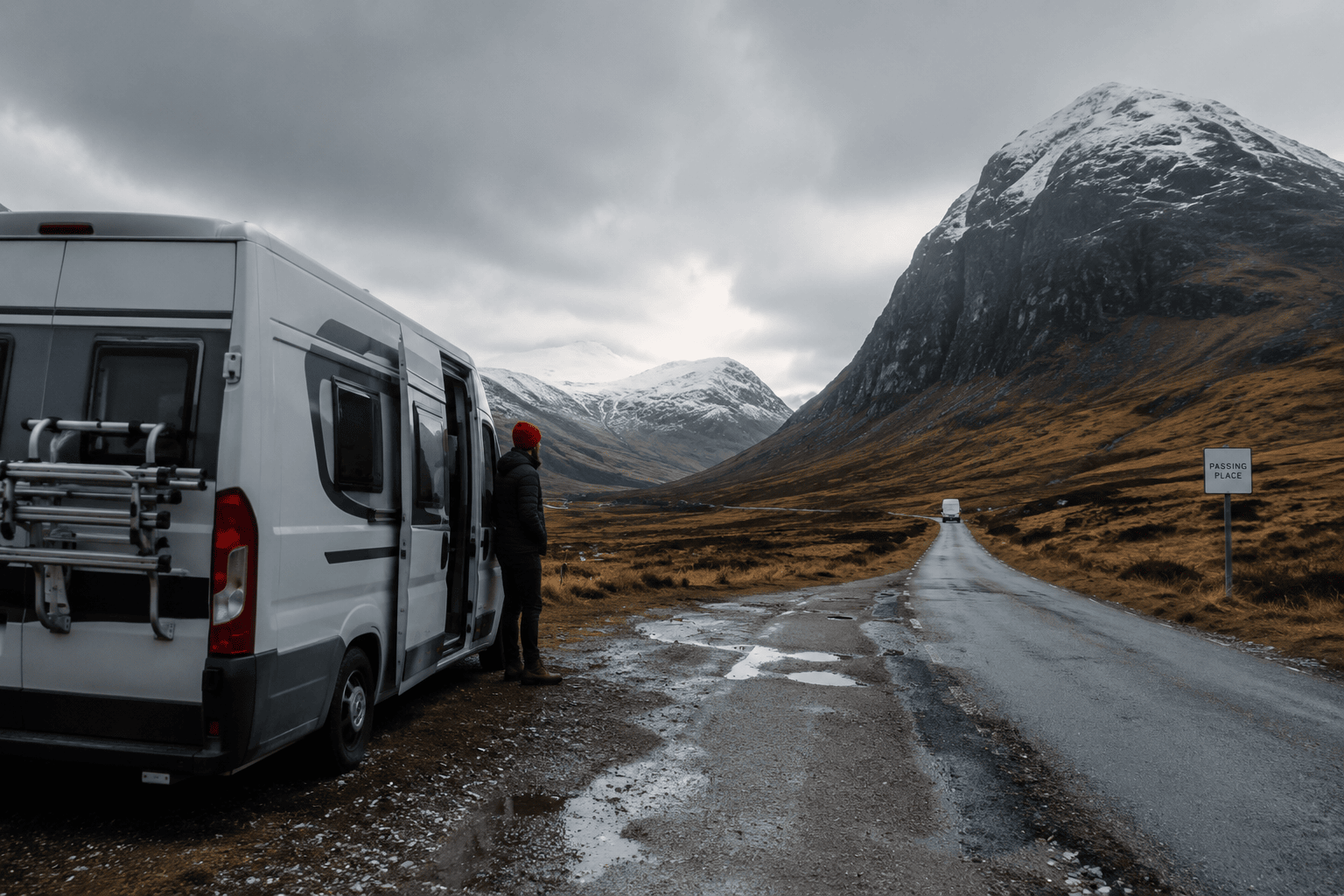
The Scottish Highlands reward travellers with unforgettable scenery. One moment you’re driving past peaceful lochs, the next you’re surrounded by towering mountains and winding single-track roads. It is easy to see why so many people choose a motorhome holiday here.
Parking, though, often catches first-time visitors off guard.
Many of the Highlands were never designed for large recreational vehicles. Small villages, narrow roads, busy tourist hotspots, and limited overnight facilities can quickly turn a dream trip into a frustrating one. The good news? Most motorhome parking issues in Scottish Highlands can be avoided with a little planning and a good understanding of local etiquette.
Whether you’ve booked your first Motorhome hire UK adventure or you’re returning for another Highland escape, this guide explains the most common parking challenges and how to avoid them.
Why Parking Can Be Difficult in the Scottish Highlands
Unlike many parts of England, much of the Highlands consists of rural roads, protected landscapes, and small communities. During spring and summer, visitor numbers increase dramatically while parking spaces remain limited.
Some of the biggest reasons parking becomes difficult include:
- Narrow single-track roads with designated passing places
- Popular viewpoints filling early in the day
- Limited overnight parking options
- Seasonal tourist traffic on routes such as the North Coast 500
- Local restrictions introduced to protect communities and the environment
Many travellers assume they can stop almost anywhere. In reality, responsible parking is essential for keeping these incredible locations accessible to everyone.
Common Motorhome Parking Problems and Practical Solutions
1. Using Passing Places as Parking Bays
One of the most common mistakes visitors make is parking inside passing places.
Passing places exist to allow vehicles travelling in opposite directions to pass safely. Blocking them creates congestion and can delay emergency services, delivery vehicles, and local residents.
What to do instead:
- Continue driving until you reach a proper parking area.
- Plan regular stops before setting off.
- Use official motorhome parking facilities whenever possible.
A few extra minutes of driving is far better than creating a traffic bottleneck on a narrow Highland road.
2. Assuming Every Lay-by Allows Overnight Parking
Lay-bys are designed primarily as short rest stops rather than campsites.
Although some may allow an overnight stay where no restrictions apply, many are unsuitable due to their size, location, nearby homes, or local regulations. Setting out chairs, awnings, or barbeques in these spaces is generally considered inappropriate and may attract complaints.
Before stopping overnight, always check local signage and choose locations that welcome motorhomes.
If your itinerary includes premium luxury motorhomes for hire, using dedicated overnight stops provides better security, more space, and useful facilities such as fresh water and waste disposal.
3. Parking on Grass Verges or Soft Ground
A grassy verge may look like an ideal place to stop, but appearances can be deceptive. Heavy motorhomes can sink into soft ground, particularly after rainfall, causing damage to verges and sometimes requiring vehicle recovery.
Whenever possible, stick to surfaced parking areas that are suitable for larger vehicles. If a space looks too small or unstable, keep driving. There is usually another option a little further along the route.
4. Arriving Too Late at Popular Destinations
Places such as Glencoe, Glenfinnan, the Isle of Skye, and sections of the North Coast 500 attract thousands of visitors during peak season. By late morning, many official car parks are already full.
A simple change to your schedule makes a huge difference.
| Travel Tip | Why It Helps |
| Arrive before 9:00 am | More parking spaces available |
| Visit later in the evening | Quieter roads and fewer crowds |
| Stay overnight at nearby campsites | Avoid searching for parking each morning |
| Plan alternative stops | Reduces pressure if your first choice is full |
5. Forgetting About Vehicle Size Restrictions
Many first-time renters underestimate the height, width, and turning circle of a motorhome. Some village car parks have height barriers, while others simply cannot accommodate larger vehicles.
Before leaving each morning:
- Check your vehicle dimensions.
- Review your planned parking locations.
- Use motorhome-friendly navigation apps that avoid unsuitable roads.
This small habit saves time and prevents stressful detours.
Responsible Parking Protects the Highlands
The Highlands are one of the UK’s most treasured landscapes, and local communities work hard to keep them welcoming.
Responsible parking means:
- Never blocking entrances or farm gates.
- Leaving passing places clear at all times.
- Taking rubbish away with you.
- Emptying waste only at approved disposal points.
- Respecting signs, local guidance, and nearby residents.
These simple actions help preserve the environment and ensure future visitors can enjoy the same freedom.
Planning Ahead Makes Every Journey Easier
A successful Highland road trip starts long before you turn the ignition key.
Choosing a reliable motorhome, planning overnight stops, checking parking options, and understanding local rules all contribute to a smoother holiday. Travellers who hire modern, well-equipped vehicles often find parking easier because many official motorhome sites are designed to accommodate standard touring vehicles comfortably.
If you’re searching for the Most Luxurious Motorhome for a Scottish adventure, look for practical features alongside comfort. Reversing cameras, parking sensors, compact layouts, and good visibility can make navigating Highland roads far less intimidating.
Final Thoughts
The Scottish Highlands are best explored at a slower pace. Some of the most memorable moments happen when you pull into a quiet viewpoint, enjoy a cup of tea overlooking a loch, or wake up at a peaceful campsite surrounded by mountains.
Understanding the common motorhome parking issues in Scottish Highlands helps you avoid unnecessary stress and travel with confidence. A little preparation, respect for local communities, and smart route planning will make your holiday safer, more enjoyable, and far more relaxing.
If you’re planning your next Highland escape, choosing a well-maintained motorhome from Jepsons Ribble Valley Motorhome Hire gives you the comfort and confidence to focus on what really matters, enjoying the journey, one scenic mile at a time.
FAQs
1. Can you park a motorhome anywhere in the Scottish Highlands?
No. You should only park where it is safe, legal, and permitted. Avoid blocking passing places, private land, entrances, or areas with parking restrictions.
2. Is it legal to sleep overnight in a motorhome in Scotland?
Overnight stays may be allowed in some locations, but they are not permitted everywhere. Always follow local signage and use designated motorhome parking areas or campsites where possible.
3. Are motorhomes allowed on the North Coast 500?
Yes. Motorhomes are welcome on the NC500, but drivers should use passing places correctly, plan parking in advance, and travel responsibly during busy periods.
4. What is the biggest parking mistake motorhome drivers make in the Highlands?
The most common mistake is parking in passing places or unsuitable lay-bys, which can block traffic and inconvenience local communities.
5. How can I make parking easier during a Highland motorhome trip?
Plan your route ahead, arrive early at popular attractions, use official motorhome parking facilities, check your vehicle dimensions, and choose a motorhome that’s easy to manoeuvre.